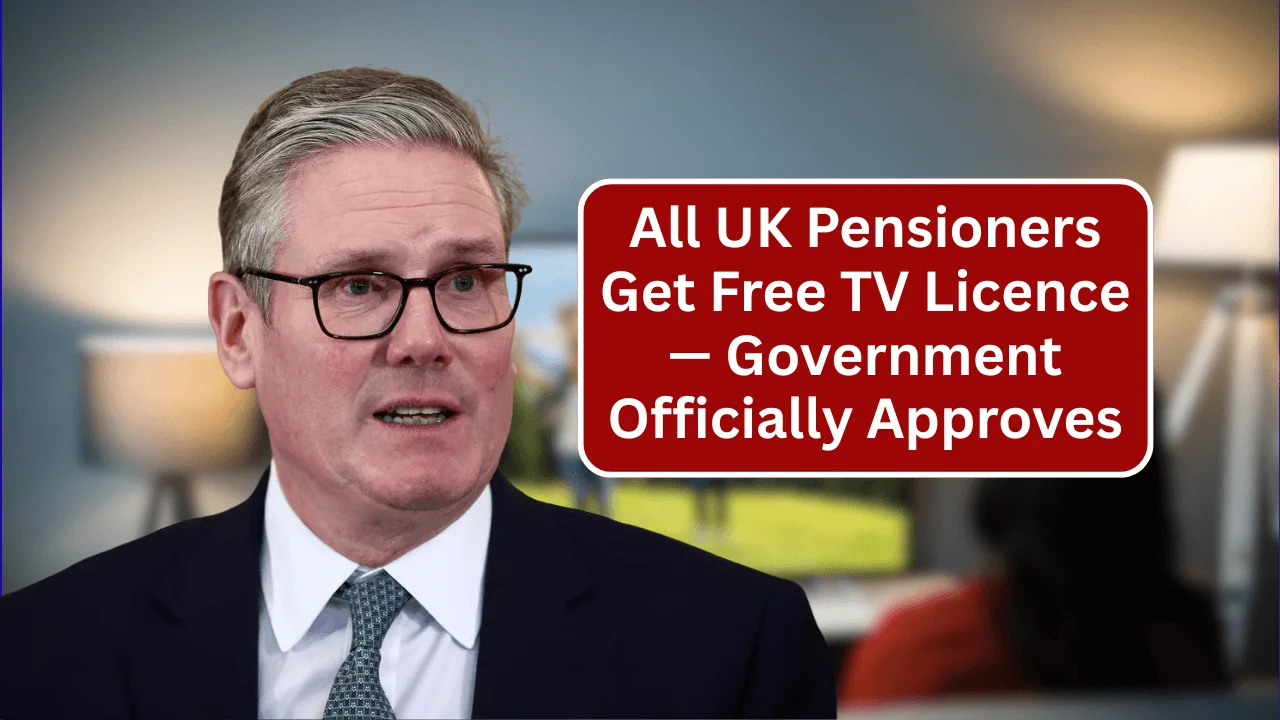
UK Government has officially confirmed a new plan that will allow all pensioners to receive a free TV licence, marking one of the biggest cost-of-living boosts for older citizens in years. The announcement, which has been warmly received across the country, reverses years of debate and public concern over rising TV licence costs for elderly households.
Under the new scheme, every pensioner above the State Pension age will be eligible for a 100% TV licence fee exemption, starting early next year. The government says this move is designed to “ease financial pressures” on those living on fixed incomes and ensure equal access to information, news, and entertainment.
Why the Government Approved the Free TV Licence for Pensioners
For years, UK pensioners have faced growing costs due to inflation, energy bills, and healthcare expenses. Many older people complained that the annual £169.50 TV licence fee was becoming unaffordable, particularly for those relying solely on their State Pension.
The government has stated that reinstating the free licence is a “fairness and dignity measure” aimed at protecting senior citizens during a time of financial strain. Officials added that television remains a vital connection for millions of elderly people — offering companionship, access to important news, and cultural inclusion.
When the Free TV Licence Will Start
According to the Department for Culture, Media and Sport (DCMS), the new rule will officially begin on 1 April 2026, following the completion of administrative arrangements with the BBC and TV Licensing.
All existing pensioners who currently pay for their licence will automatically be refunded for the months following the official start date, ensuring a smooth transition to the free scheme.
The change will be applied automatically to those receiving the State Pension, meaning no new application process is required for most recipients.
Who Will Qualify for the Free TV Licence
The free TV licence will be available to:
- All individuals over the State Pension age, regardless of income or benefits.
- Couples where at least one partner is of State Pension age.
- Those living in residential care homes or supported housing schemes.
This means that, unlike previous versions of the scheme, it will no longer be limited to those receiving Pension Credit — a move welcomed by campaigners who said the older system unfairly excluded thousands of low-income pensioners.
How Pensioners Will Receive the Benefit
The BBC and TV Licensing have confirmed that the process will be automatic for most people. If you already hold a valid TV licence, your records will be updated once your National Insurance and pension data are verified.
Those who no longer need a TV licence will receive written confirmation by post or email. Refunds for payments made after the effective date will be processed directly to your bank account or TV Licensing account balance.
Background: Why the Old System Was Controversial
The debate over free TV licences has been ongoing since 2020, when the BBC stopped offering free licences to all over-75s and restricted them only to those receiving Pension Credit. That decision led to widespread criticism and accusations of unfairness.
Charities such as Age UK and Silver Voices led petitions demanding the government step in to restore the benefit for all elderly citizens. Many argued that access to television was a “basic social right” for seniors who often face loneliness and isolation.
After several years of consultation, the government finally decided to take over the funding directly from general taxation, ensuring that the cost would not fall on the BBC.
What the Government Said About the Decision
In an official statement, Culture Secretary Lucy Frazer said:
“This decision reflects our commitment to fairness and respect for older generations who have contributed so much to our society. Free access to television will ensure that every pensioner stays connected, informed, and entertained.”
Prime Minister Rishi Sunak also commented that the new policy was part of a broader package to support pensioners during a period of economic uncertainty, adding:
“It’s about recognising the value of our older citizens and making sure that no one is left behind because of financial hardship.”
How Much the Scheme Will Cost
According to Treasury estimates, the policy will cost approximately £800 million per year, funded directly through government spending. However, economists say this investment could generate long-term social benefits, reducing loneliness and improving mental health among pensioners.
The Treasury has described the cost as “a responsible and justified use of public money”, noting that the total amount represents less than 0.1% of annual government expenditure.
Impact on the BBC and Public Services
The BBC has welcomed the announcement, calling it a “positive and fair solution.” The broadcaster said it had struggled financially to maintain free licences on its own but would now receive government support to cover the revenue shortfall.
This arrangement ensures the BBC can continue funding its key programming and public services without making further cuts or increasing other fees.
Public Reaction Across the UK
The reaction to the news has been overwhelmingly positive. Thousands of pensioners have praised the government for finally listening to their concerns.
Margaret Hill, a 74-year-old from Manchester, said:
“It’s a relief. Television is my main company most days, and this will make a huge difference to people like me who are just trying to get by.”
On social media, many Britons celebrated the move as a “victory for fairness”, while others called for similar reforms in areas like free transport and utility discounts for the elderly.
What Charities and Experts Are Saying
Age UK’s Director, Caroline Abrahams, described the move as “a huge win for older people,” adding that it would help fight isolation and digital exclusion.
Economists also noted that the measure could have wider benefits. By easing household budgets, pensioners may be able to spend more on local goods and services — providing a small boost to the UK economy.
However, some experts have called for long-term guarantees to prevent future governments from reversing the benefit again.
What Pensioners Should Do Now
If you are a pensioner, here’s what you need to do to make sure you receive your free TV licence:
- Keep your pension details and address up to date with the Department for Work and Pensions (DWP).
- Ensure your TV licence account is registered in your name.
- Watch for official communication from TV Licensing or the BBC early next year.
- Do not share personal or banking details through unofficial links — scammers often target pensioners during benefit rollouts.
How This Change Fits into Wider Pensioner Support
The TV licence reform is part of a broader government strategy to support older citizens. Alongside this measure, the government has confirmed:
- The State Pension triple lock will remain in place.
- Additional funding for Winter Fuel Payments and Pension Credit awareness campaigns.
- Plans to expand free bus passes and improve healthcare access for those over 65.
Together, these changes form one of the most significant welfare boosts for pensioners in recent years.
Challenges and Criticisms
While most reactions are positive, some critics argue that the government could have used the funds for direct pension increases instead. Others worry about the administrative complexity of verifying millions of records quickly.
Still, ministers insist the system is “fully funded and operationally ready” and that the rollout will be completed within the announced timeframe.
Looking Ahead: What This Means for Future Generations
The reinstatement of free TV licences marks a symbolic and practical victory for pensioners — one that recognises their contribution to the nation and provides meaningful relief at a time of high living costs.
It also sets a precedent for future policies: as the UK’s ageing population grows, governments will likely need to take further steps to protect older citizens’ financial and social wellbeing.
Final Thoughts
The government’s decision to bring back free TV licences for all pensioners is more than just a financial gesture — it’s a statement of respect. For millions of elderly Britons, this change means independence, dignity, and connection to the world beyond their doorstep.
As April 2026 approaches, pensioners can look forward to a small but meaningful improvement in their daily lives — proof that, at last, their voices have been heard loud and clear.