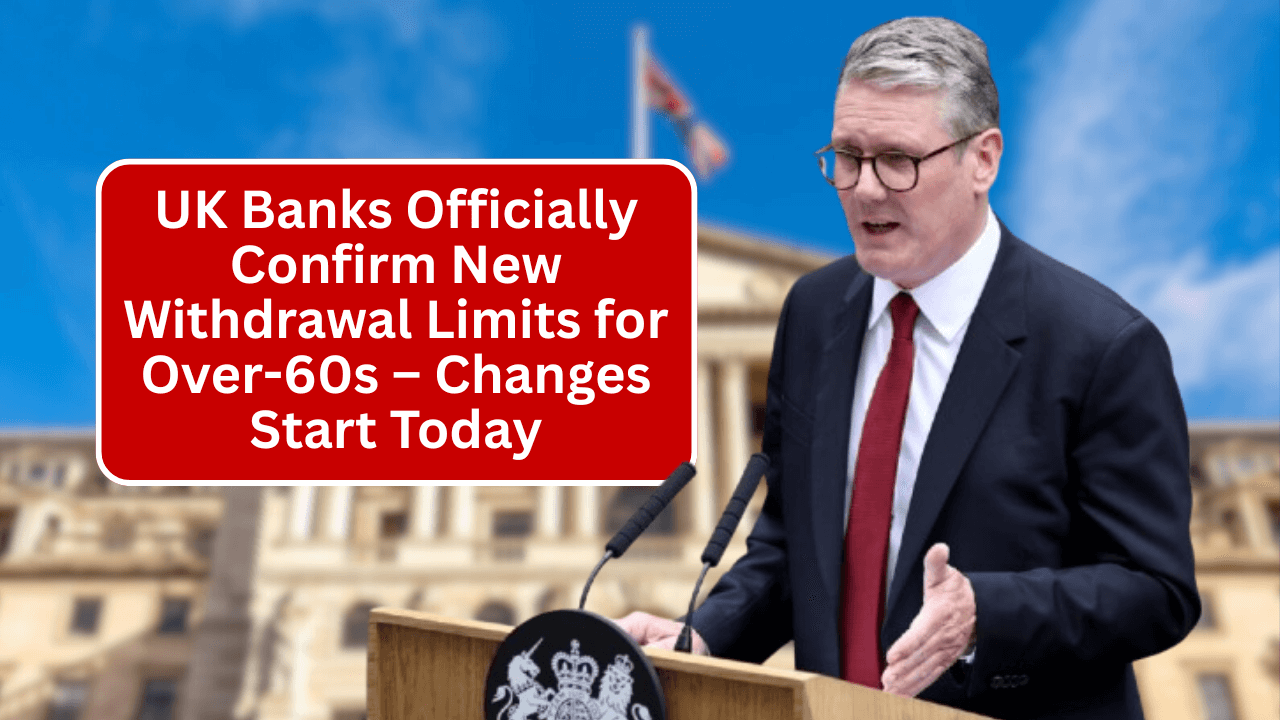
The UK’s leading high street banks have officially confirmed that new cash withdrawal limits for customers aged over 60 have now come into effect. Starting today, these changes are designed to strengthen financial security, reduce fraud risks, and promote digital banking. However, many pensioners and older savers are worried about what these new limits mean for their day-to-day access to cash.
Here’s everything you need to know about the new withdrawal rules, how they work, who they affect, and what you can do if you prefer using cash instead of online payments.
Why Banks Have Introduced New Withdrawal Limits
According to official bank statements and the Financial Conduct Authority (FCA), the decision to impose new limits follows a sharp rise in financial scams and unauthorised withdrawals targeting senior citizens. Over the past two years, reports of online and in-person banking fraud among over-60s have increased by nearly 40%.
Banks say the new rules aim to protect older customers while balancing the need for convenience. They also reflect changes in how money is used across the country, as more transactions move online and fewer people rely on physical cash.
What the New Withdrawal Limits Mean
Under the updated policy, UK banks have introduced structured withdrawal caps both at ATMs and within branch counters for customers aged 60 and above. While the exact limits vary slightly by institution, the general framework is as follows:
- ATM Withdrawals: A daily limit of £500 now applies for most banks, replacing the previous limit of £1,000.
- In-Branch Withdrawals: Counter withdrawals above £1,500 per day will now require 24-hour advance notice and an additional ID verification step.
- Weekly Limit Checks: Some banks may monitor cumulative weekly cash withdrawals and alert customers if their activity appears unusual.
- Joint Accounts: Where one account holder is over 60, banks may apply safeguards to the entire account for fraud prevention.
These measures, banks say, are not intended to restrict access to money but to protect vulnerable customers from unauthorised withdrawals or scams.
Which Banks Are Affected
The new withdrawal policy has been confirmed by the UK’s largest banking institutions, including:
- Lloyds Banking Group (Lloyds, Halifax, Bank of Scotland)
- Barclays Bank
- NatWest Group (NatWest, Royal Bank of Scotland)
- HSBC UK
- Santander UK
- Nationwide Building Society
Each of these banks has issued its own customer guidance, confirming that the policy aligns with national fraud prevention frameworks supported by the Bank of England and the FCA.
Bank Officials Explain the Reasoning
A spokesperson for Barclays Bank said:
“We understand that many of our older customers prefer cash, but we must balance this preference with growing security threats. These updated limits are a proactive measure to protect funds while keeping access flexible.”
Similarly, HSBC noted that customers who require higher cash amounts for legitimate reasons — such as home improvements, travel, or medical payments — can still withdraw larger sums through pre-arranged authorisation.
How the Rules Impact Over-60s
For customers who frequently use cash, these changes may require small adjustments. Many older people prefer cash for budgeting or day-to-day spending, so a lower withdrawal limit could mean more frequent bank visits.
However, experts say that these rules are not meant to stop people from accessing their money, only to ensure withdrawals are verified and traceable. Customers can still withdraw higher sums by requesting in advance through their branch or customer service line.
Digital Banking Encouragement
One key objective behind this policy is to encourage the adoption of digital and contactless payments among older adults. The government and banks have invested heavily in secure mobile and online banking systems designed to be user-friendly and accessible for all age groups.
To support this, many banks are offering free digital literacy workshops and tutorials for over-60 customers. The aim is to help them use apps safely, recognise scams, and manage their finances with confidence.
Protecting Pension Payments and Regular Withdrawals
State pension payments and other regular benefits will not be affected by these new withdrawal rules. Pensioners will continue to receive their payments directly into their accounts as usual.
However, banks have advised customers to review their withdrawal habits, particularly if they typically take out large sums at once. Smaller, more frequent withdrawals are now recommended to maintain both safety and convenience.
Public Reaction to the New Limits
Public opinion has been divided. While some over-60s welcome the focus on security, others see it as another step toward the “cashless society” that could disadvantage those who rely on physical money.
Many pensioner advocacy groups, such as Age UK, have called for more flexibility and better communication. In a statement, Age UK said:
“We recognise the importance of protecting people from scams, but older customers must not be left feeling restricted or excluded from access to their own money.”
Expert View: Financial Advisors Weigh In
Financial experts believe that the move could improve long-term safety but warn that clear communication is vital.
Sarah Johnston, a financial consultant with over 20 years’ experience, commented:
“Fraudsters are getting smarter, and older adults are often targeted. These rules can help prevent huge losses, but banks must ensure customers understand the process and don’t feel penalised.”
Experts also recommend that pensioners consider a secondary savings account for larger purchases, allowing planned withdrawals without triggering fraud alerts.
What You Should Do Now
If you’re over 60 and regularly withdraw cash, here are practical steps to stay ahead of these changes:
- Check your bank’s official website or app for your specific daily and weekly limits.
- Notify your bank in advance if you plan to withdraw large sums of money.
- Ensure your contact details are updated to receive alerts and fraud notifications.
- Use digital payments where possible — contactless, mobile apps, or online transfers are now highly secure.
- Ask about assistance services — many banks offer in-branch help for older customers who prefer personal banking.
The Move Toward a Safer, Smarter Banking System
The new withdrawal policy forms part of a broader initiative to make UK banking safer and more efficient. The FCA and the Banking Standards Board are working together to ensure customer rights remain protected as financial systems modernise.
Banks are also expanding their fraud-prevention teams and improving customer awareness campaigns to help older people identify phishing emails, suspicious calls, and fraudulent text messages.
Impact on Local Communities and Cash Access
Critics argue that reduced cash limits could affect small businesses and rural communities that still rely heavily on cash. In response, the government’s Access to Cash Action Group is rolling out new schemes to maintain local ATMs and post office services, ensuring no area is left behind.
These initiatives aim to strike a balance between digital progress and the need for physical money — especially in regions where cash remains essential.
The Bigger Picture: Transitioning Without Exclusion
The UK’s journey toward digital banking doesn’t mean abandoning cash entirely. Instead, it’s about creating a hybrid financial environment — one that maintains traditional options while ensuring stronger safeguards against modern fraud.
Older citizens are encouraged to embrace gradual change, taking advantage of tools and support available from both banks and charities that specialise in senior financial inclusion.
Final Thoughts
Today’s confirmation of new withdrawal limits marks a major shift in how UK banks manage customer safety and access to cash. For many over-60s, it will require small changes in habit — but it also brings stronger protections against fraud and misuse.
While the move toward a cash-lite society is clear, the UK government and banks insist that accessibility remains a top priority. By staying informed, planning withdrawals wisely, and learning safe digital habits, older Britons can continue to enjoy independence and financial control in a changing world.
In short, these new rules are not about restriction — they’re about security, modernisation, and peace of mind for millions of UK citizens.